Skip to content
  • TAI MODERN
  • Artists
  • Exhibitions
  • Gallery
  • About Japanese Bamboo Art
  • Japanese Bamboo Art
    • Represented Artists
    • Historic Works
    • About Japanese Bamboo Art
  • Contemporary Art
    • Represented Artists
    • Works Available By
  • Exhibitions
    • Current Exhibitions
    • Past Exhibitions
  • Gallery
  • Contemporary American and Japanese Bamboo Art
  • Japanese Bamboo Art
    • Represented Artists
    • Historic Works
    • About Bamboo Art
  • Contemporary Art
    • Represented Artists
    • Works Available By
  • Exhibitions
    • Current Exhibitions
    • Past Exhibitions
  • Gallery
Back to Exhibition
  • Works
  • Statement
  • Bio/CV
  • Curriculum Vitae (PDF)
  • Videos
  • Catalogues
  • Exhibitions
  • Press
  • Next Work
  • Previous Work
  • Back to Artist Page
  • Print
  • Send Inquiry
  • <
  • >
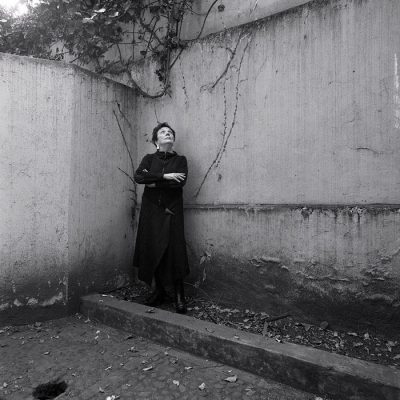
Graciela Iturbide
131087
1764

Graciela Iturbide

Born in Mexico City, Graciela Iturbide studied filmmaking at the Centro Universitario de Estudios Cinematográficos between 1969 and 1972, and worked as an assistant to photographer Manuel Alvarez Bravo, who stimulated her interest in photography. She met Henri Cartier-Bresson while traveling in Europe, and in 1978, was one of the founding members of the Mexican Council of Photography.

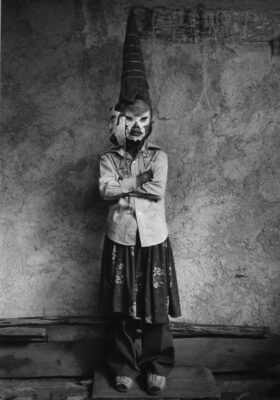
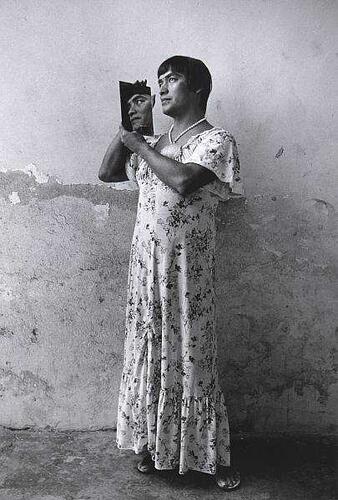
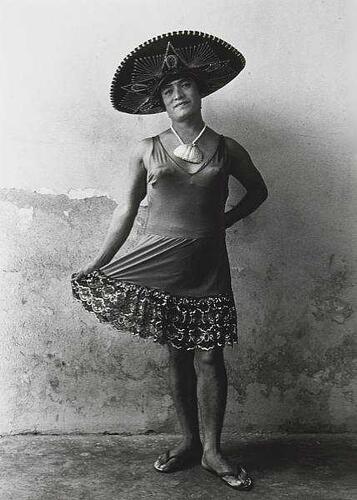
Iturbide’s exquisite high-contrast black-and-white prints convey the starkness of life for many of her subjects. Traveling through Mexico, Ecuador, Venezuela, Panama, and the Mexican community of East Los Angeles, Iturbide documents the uneasy cohabitation of ancient cultural rituals and contemporary adaptations and interpretations. One of her particular interests has been the role of women, and since 1979 she has photographed the Zapotec Indians of Juchitán, Oaxaca, among whom women are commonly accorded places of power, and stereotypical gender roles are frequently subverted. Iturbide uses photography to try to understand Mexico in its totality, as a combination of indigenous practices, and imported and assimilated Catholic religious practices, and foreign economic trade.

— Courtesy of the International Center of Photography

https://www.icp.org/browse/archive/constituents/graciela-iturbide?all/all/all/all/0

  • Thumbnails
  • Articles
  • Exhibitions
  • artnet: on view
  • VIDEO: Photographing Mexico | Art21 "Extended Play"
description

Born in Mexico City, Graciela Iturbide studied filmmaking at the Centro Universitario de Estudios Cinematográficos between 1969 and 1972, and worked as an assistant to photographer Manuel Alvarez Bravo, who stimulated her interest in photography. She met Henri Cartier-Bresson while traveling in Europe, and in 1978, was one of the founding members of the Mexican Council of Photography.

Iturbide’s exquisite high-contrast black-and-white prints convey the starkness of life for many of her subjects. Traveling through Mexico, Ecuador, Venezuela, Panama, and the Mexican community of East Los Angeles, Iturbide documents the uneasy cohabitation of ancient cultural rituals and contemporary adaptations and interpretations. One of her particular interests has been the role of women, and since 1979 she has photographed the Zapotec Indians of Juchitán, Oaxaca, among whom women are commonly accorded places of power, and stereotypical gender roles are frequently subverted. Iturbide uses photography to try to understand Mexico in its totality, as a combination of indigenous practices, and imported and assimilated Catholic religious practices, and foreign economic trade.

— Courtesy of the International Center of Photography

https://www.icp.org/browse/archive/constituents/graciela-iturbide?all/all/all/all/0

BIO/CV
ARTIST STATEMENT
  • This Artwork Changed My Life: Graciela Iturbide’s “Nuestra Señora de Las Iguanas”

    Graciela Iturbide Señora de las Iguanas, Juchitán, 1979 Etherton Gallery Eva Recinos Feb 18, 2020 Original Article  Elephant and Artsy have come together to present This Artwork Changed My Life, a creative collaboration that shares the stories of life-changing encounters with art. A new piece will be published every two weeks on both Elephant and Artsy. Together, our publications want to […]
  • How Graciela Iturbide Became One of Mexico’s Greatest Photographers

    Elyssa Goodman Feb 8, 2019 Original article at Artsy.net “I’m not magical realism, Surrealism, nothing like that. I’m Graciela Iturbide,” the photographer stated in a 2017 video. Considered one of the greatest contemporary photographers of Mexico, her home country, and of all of Latin America, Iturbide rejects the label of magical realism for her work. […]
  • National Spotlight: Graciela Iturbide’s Mexico

      By JENN SHAPLAND JANUARY 30, 2019 Original article at themagsantafe.com Museum of Fine Arts Boston, Boston, Massachusetts January 19, 2019 – May 12, 2019 Photos of Mexico from the 1970s to 2005 by Mexican photographer Graciela Iturbide bring a documentary impulse in touch with a poetic eye. Her photos are personal, yet immersive in cultures not her own; […]
  • Robert Fantozzi, Flor Garduno, Graciela Iturbide, Rachelle Mozman, Re’e Pe’e

    If you are an artistic photographer; to what extent does your home—the place where you live and work—color the intent and result of the portraits you shoot?  A group of artists from Mexico, Peru, Panama and Cuba whose photographs explore their subject’s connections to their cultural and geographical context are featured in “Portrait and Place,” […]
  • PRESS RELEASE – Portrait and Place: Contemporary Latin American Photography

    January 30-Febuary 28 SANTA FE, NEW MEXICO – Eight Modern is pleased to announce its upcoming exhibition, Portrait and Place: Contemporary Latin American Photography. Portrait and Place brings together a group of artists from Mexico, Peru, Panama and Cuba whose photographs explore their subjects’ connections, both expected and unexpected, to their cultural and geographical context. […]

This Artwork Changed My Life: Graciela Iturbide’s “Nuestra Señora de Las Iguanas”

Graciela Iturbide
Señora de las Iguanas, Juchitán, 1979
Etherton Gallery

Eva Recinos
Feb 18, 2020
Original Article 

Elephant and Artsy have come together to present This Artwork Changed My Life, a creative collaboration that shares the stories of life-changing encounters with art. A new piece will be published every two weeks on both Elephant and Artsy. Together, our publications want to celebrate the personal and transformative power of art.

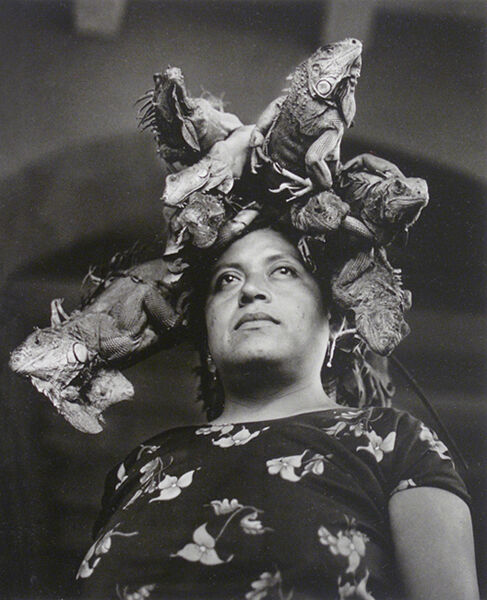
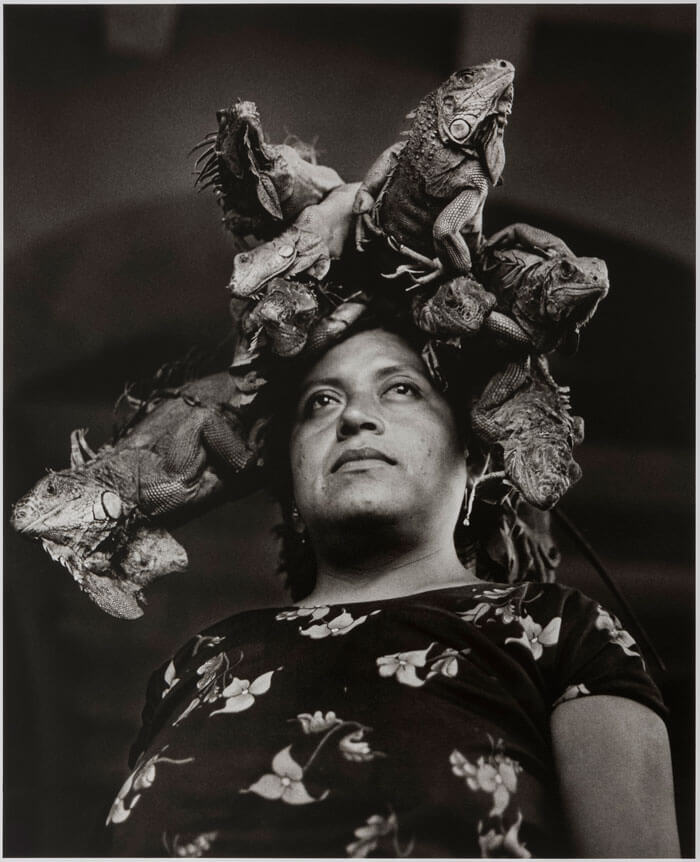
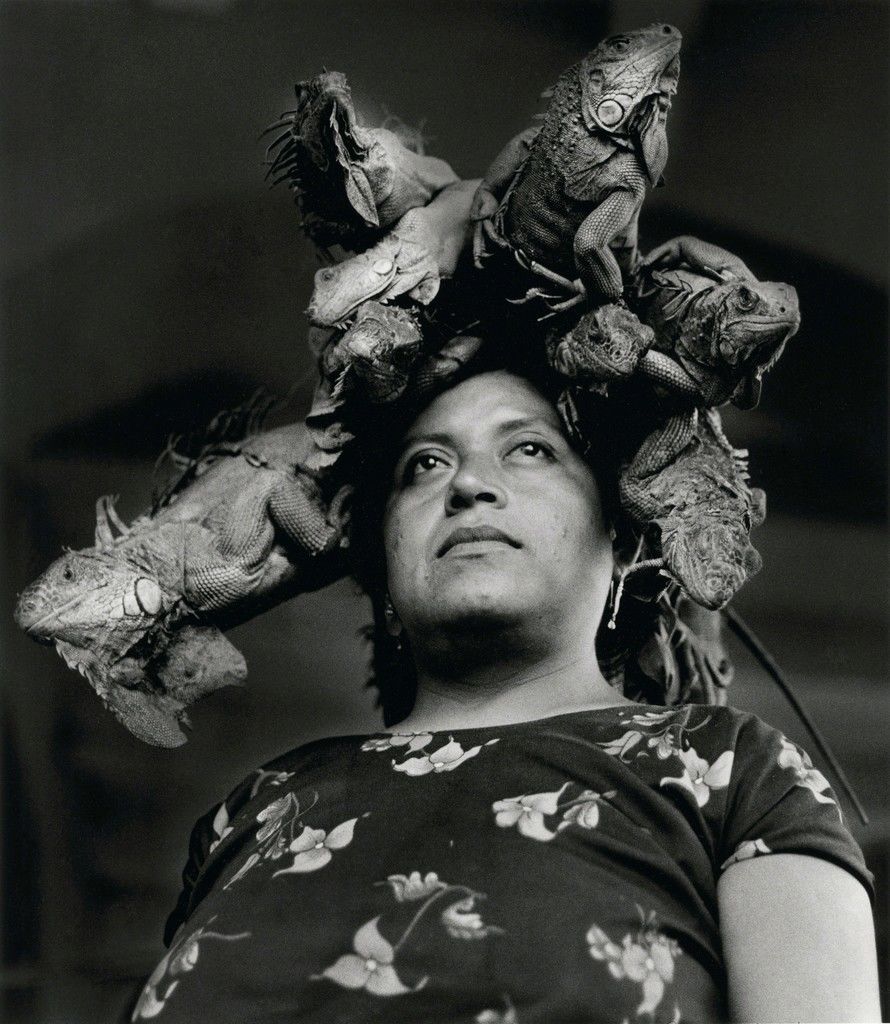
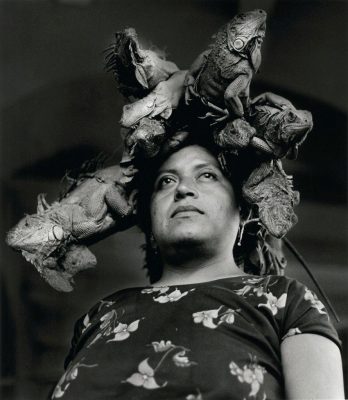
Graciela Iturbide spent around 10 years photographing Juchitán de Zaragoza, a small town in Oaxaca. Juchitán is often referred to as a matriarchy—primarily because women control its economy—and Iturbide’s friend, the artist Francisco Toledo, had asked her to capture it. She did, and so was born one of her most iconic images: Nuestra Señora de Las Iguanas (Our Lady of the Iguanas), Juchitán, Oaxaca (1979).

In the gelatin silver photograph, Iturbide captures Zobeida, a woman with a crown of iguanas perched on her head. The woman looks past the camera in a self-assured, almost defiant way. The background is slightly out of focus to keep the attention on this woman, caught somewhere between the everyday and the mythical.

I first encountered this piece—and Iturbide’s work—by accident, at a Santa Monica gallery while I was in the area for another writing assignment. As an art history student in college and grad school, I’d grown comfortable with wandering into white gallery spaces and high-ceilinged museums. I’d also accepted that the artworks on the wall would rarely feature certain people—people from my own Latinx heritage (I am a first generation Guatemalan American), but also other communities of color, indigenous communities, and Black communities.
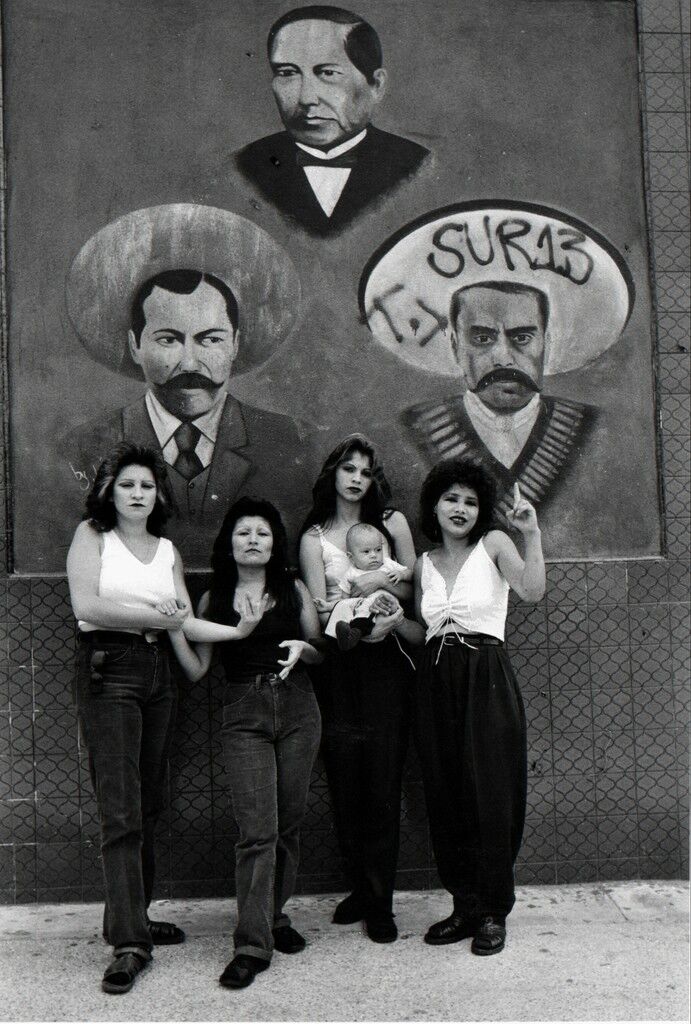
Cholas I (con Zapata y Villa), White Fence, East L.A.

Graciela Iturbide
Cholas I (con Zapata y Villa), White Fence, East L.A., 1986
Ruiz-Healy Art

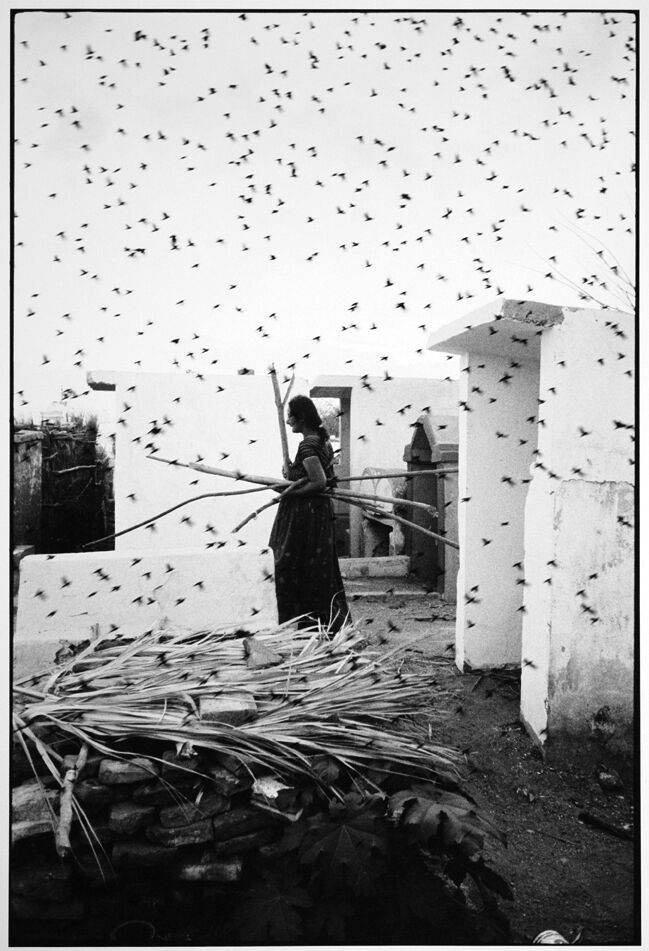
Cementerio, Juchitán

Graciela Iturbide
Cementerio, Juchitán
Etherton Gallery

After finishing my master’s, I found myself reflecting on the place of Latina photographers within the art world. The work of artists like Laura Aguilar and Christina Fernandez were a revelation to me, and now, Iturbide’s photography hit me with full force. In her pieces, I saw death captured matter-of-factly; nature transformed into metaphor; people in East Los Angeles juxtaposed against the backdrop of a fraught America.

I was ashamed I didn’t know more about Iturbide’s work. So much of my art-historical education—the images in textbooks, the works I kept seeing over and over in permanent collections—embedded other photographers into my memory. Those artists reflected realities in a way that pulled me in, but still left me with the feeling that I was right outside of the frame.

Here was a woman of color capturing her subject in a sensitive manner, tracing her own roots. Iturbide was working in the mercado on the day that she saw Zobeida, the vendor with a halo of iguanas. In the image, Zobeida isn’t exoticized or examined. Iturbide managed to delicately craft a balance in which her subject appears timeless, yet humanized. She carries the iguanas out of practicality, their beady eyes and drooping jowls soon to be made into stews and tamales.

The Juchitán community dubbed the photo of Zobeida “The Juchitán Medusa.” It becomes, in a way, a total departure from many art-historical and mythological depictions of the snake-headed woman. Here, Zobeida holds onto her power, plucking and adding iguanas to her crown at her whim. No Greek “hero” in sight.

In the biography Photographic: The Life of Graciela Iturbide, author Isabel Quintero writes: “Remember, everything for Graciela is complicit. She doesn’t work alone.”

In the photograph, we look up at Zobeida, her chin creating a shadow over her neck. We see the iguanas from all angles; just a hint of her hair peeks out from beneath their bodies. Iturbide constructs this image for us, but she allows for Zobeida’s own interiority to come through.

As a Latina, Iturbide’s artistic practice has encouraged me to pursue my own creative passions and search for answers about my own cultural history. Studying the image again at home, I remembered the women I saw in Antigua, Guatemala, who braided colorful thread through tourists’ hair in exchange for a few quetzales. As a teenager, I sat for one of the women and took photos of the town as someone passing through, not someone familiar with the area.
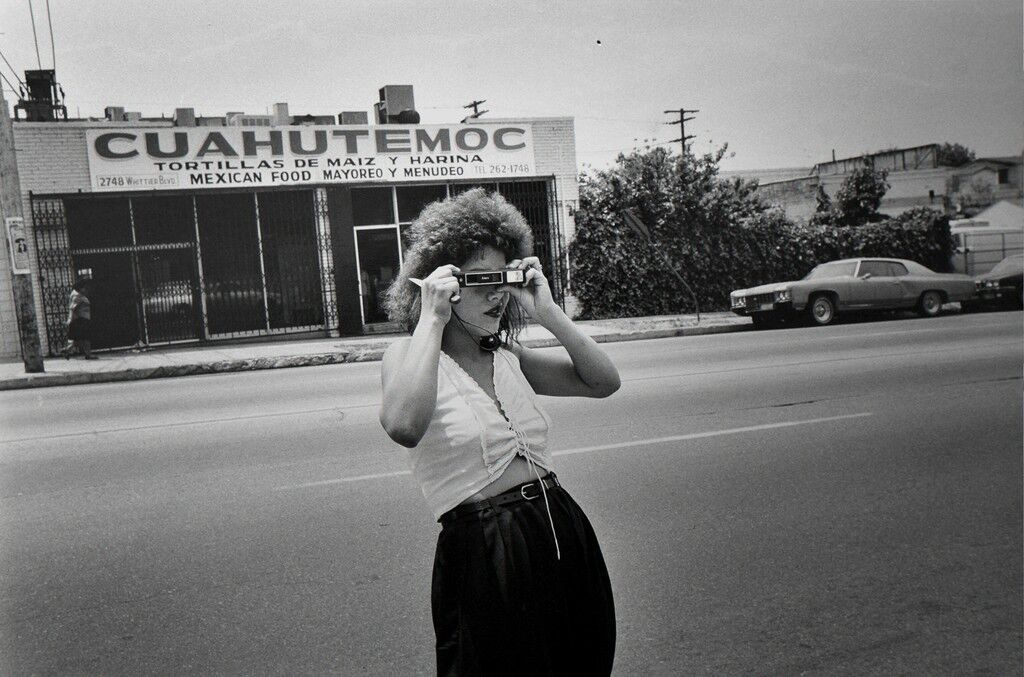
Cristina tomando fotos en Los Angeles

Graciela Iturbide
Cristina tomando fotos en Los Angeles, 1986
ROSEGALLERY

I remembered, also, the moment when a man brought his pet iguana onto the bus in South Los Angeles, my hometown. He had a leash on it and the reptile kept eerily still on the floor, unfazed. A thread connects me to California and Guatemala, but one end is pulled more taut than the other. I haven’t been to Guatemala in more than a decade.

Nuestra Señora de Las Iguanas became a motivation for me—to keep mining my own personal history; to see the validity in my narratives, as both a writer and an art lover. Zobeida’s humanity extends beyond the frame of the photograph, asking that we look a little closer.
How Graciela Iturbide Became One of Mexico’s Greatest Photographers

Elyssa Goodman
Feb 8, 2019
Original article at Artsy.net

“I’m not magical realism, Surrealism, nothing like that. I’m Graciela Iturbide,” the photographer stated in a 2017 video. Considered one of the greatest contemporary photographers of Mexico, her home country, and of all of Latin America, Iturbide rejects the label of magical realism for her work. “No, magical realism you invented for García Márquez, Vargas Llosa, for the ‘boom’ of literature, and to be able to better sell books,” she continued. As an artist, she hopes to be defined simply as herself.

In a career spanning over 50 years, and with photographs from her beloved Mexico, as well as India, Argentina, Cuba, and the United States, Iturbide became known for black-and-white images that raise documentary photography to a poetic plane. Her images are only magical realism in that they capture the magic of what exists in front of us, or in places we have not yet seen. A new exhibition at the Museum of Fine Arts, Boston, entitled “Graciela Iturbide’s Mexico,” features 125 of Iturbide’s images from her five decades in photography.

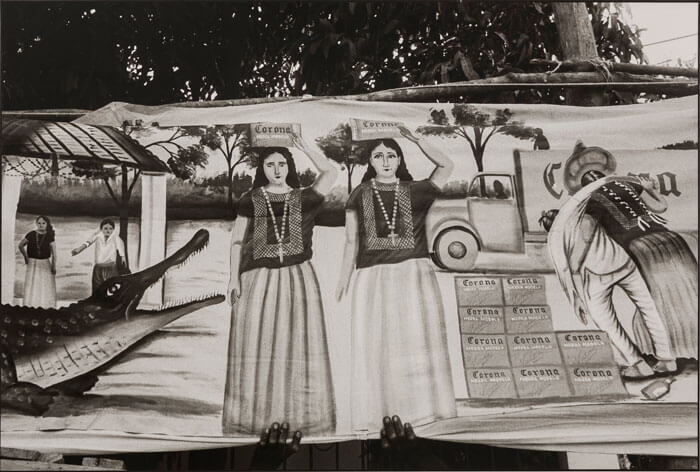
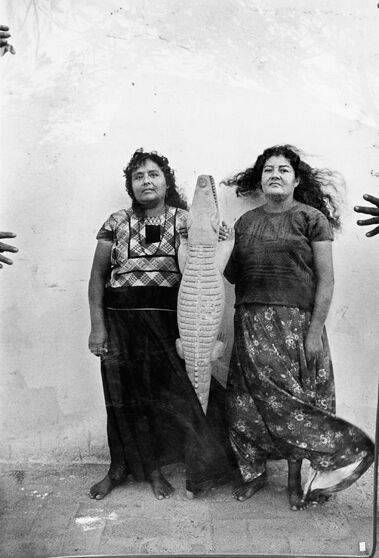
Lagarto (Alligator), Juchitan, Oaxaca
Graciela Iturbide, Lagarto (Alligator), Juchitan, Oaxaca, 1986. Etherton Gallery

El Gallo (The Rooster), Juchitán, Oaxaca
Graciela Iturbide, El Gallo (The Rooster), Juchitán, Oaxaca, 1986. Etherton Gallery

Iturbide grew up as the oldest of 13 children in a Roman Catholic family, and she was first exposed to photography by her father, who photographed her and her siblings. Iturbide had hoped to be a writer, but due to her family’s conservatism, she wasn’t allowed. That desire for lyricism appears in her pictures instead. “What I essentially look for everywhere is poetry,” she once said.

Iturbide married at 19, and in three years, she had three children; her second child, Claudia, passed away at just six years old. Shortly after, she and her husband divorced, and a distraught Iturbide returned to school at Mexico’s Centro Universitario de Estudios Cinematográficos. She studied cinematography, hoping to become a film director, but her family did not approve. “They are bishops and archbishops and you can imagine what I am to them: the crazy one who studies film and gets divorced,” she told the Los Angeles Times in 2017. But soon, Iturbide met professor Manuel Álvarez Bravo, one of the defining photographers of both modernism and 20th-century Latin America. “He was not just a photography teacher. He was a teacher of life,” she said in a video for MFA Boston. “Above all, he taught me that I had to have time.” From 1970 to ’71, Iturbide was his achichincle, his work assistant, and with him, she began to explore more parts of Mexico.

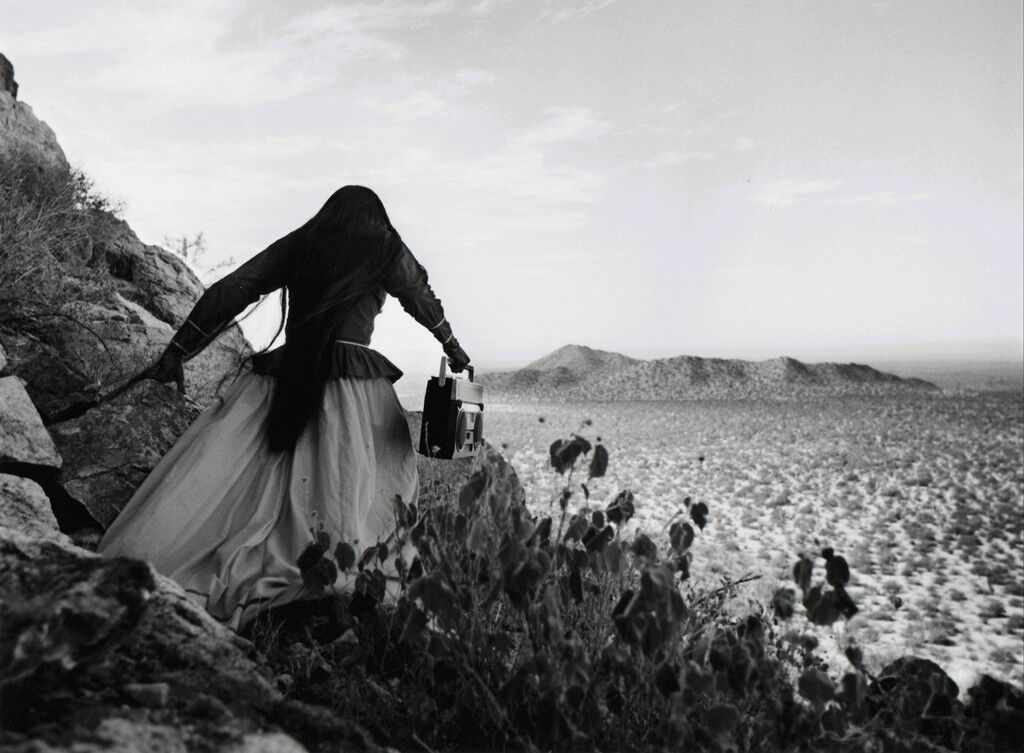
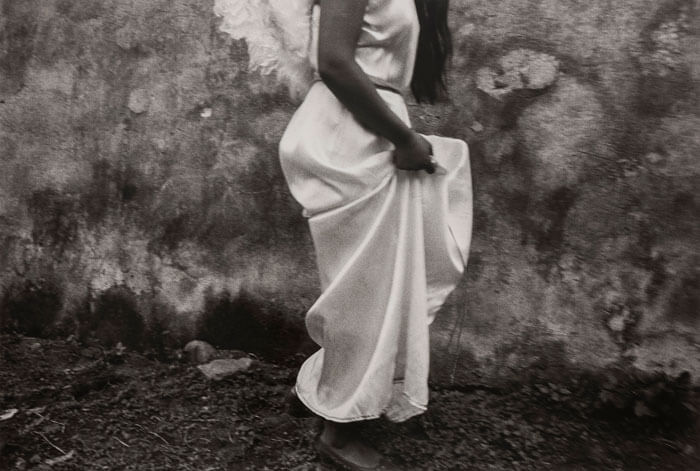
Mujer Ángel, Desierto de Sonora (Angel of the Desert), Mexico
Graciela Iturbide, Mujer Ángel, Desierto de Sonora (Angel of the Desert), Mexico, 1979. Etherton Gallery

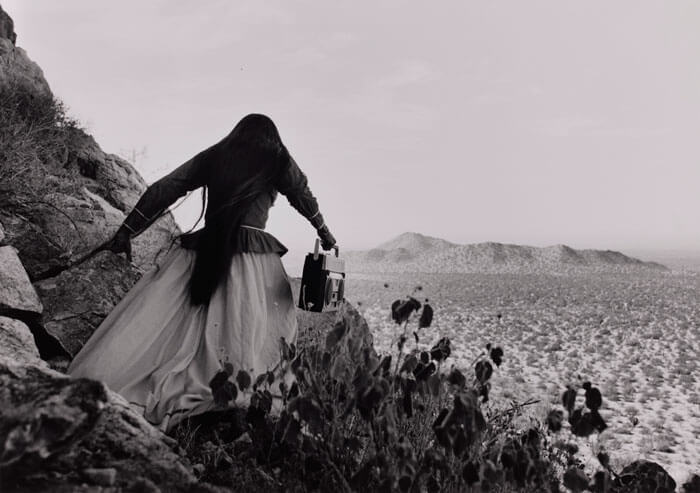
Towards the end of the decade, Iturbide began photographing the indigenous communities of Mexico, commissioned by the Ethnographic Archive of the National Indigenous Institute of Mexico in 1978. She met the Seri people of the Sonoran desert, forming a rapport with their community. It was there that she made one of her most famous images, Mujer Ángel (1979), or “Angel Woman.” In the photograph, a Seri woman walks near the area’s caves, long dark hair at her back and a boombox at her side, her skirts frozen in motion. “For me, this photograph represents the transition between their traditional way of life, and the way capitalism has changed it,” Iturbide told The Guardian in 2012. “I liked the fact that they were autonomous and hadn’t lost their traditions, but had taken what they needed from American culture.” Iturbide has acknowledged the image as one of her best photographs. It also later became the cover of rock band Rage Against the Machine’s single “Vietnow” in 1996.

In 1979, Mexican painter Francisco Toledo invited her to photograph the people of Juchitán, a city in southeast Oaxaca. Artists like Sergei Eisenstein, Henri Cartier-Bresson, Diego Rivera, and Tina Modotti had traveled to the city for inspiration in the 1930s, and Toledo was trying to revive the the city as an artists’ destination. Iturbide accepted, and the city eventually became like a second home to her; she would live there for weeks at a time making images. It was in Juchitán that Iturbide met the Zapotec women, who ran the local community and economy. Inspired by their independence, Iturbide photographed in Juchitán on and off between 1979 and 1988, releasing a monograph entitled Juchitán de las Mujeres in 1989.

Nuestra Señora de las Iguanas. Juchitán, México
Graciela Iturbide, Nuestra Señora de las Iguanas. Juchitán, México, 1979. Rafael Ortiz

Perhaps Iturbide’s most famous image, Nuestra Señora de las Iguanas (1979), or “Our Lady of the Iguanas,” is a portrait of a Juchitán woman wearing a crown of iguanas on her head. The image became one of the town’s most famous identifiers, inspired a statue there, and eventually became one of the country’s most iconic images. The photograph is also placed on road signs in the city, as well as on bottles of Mezcal (without Iturbide’s permission), and has been the subject of murals in Los Angeles.

During this time, Iturbide established a style for herself: Her signature high-contrast, black-and-white images brought a sense of the extraordinary to the mundane. She gave a voice to communities that were often ignored, but moved beyond reportage, sharing the richness of their cultures. This led to more commissioned work around the world. “As an artist you need to move on, you need to try new things,” she once said. “I can’t take pictures of Juchitán and Juchitán over and over again. And in the end, photography for me is just an excuse to get to know the world.” Iturbide had her first international solo exhibition at Centre Pompidou in Paris in 1982; since then, her work has been exhibited in solo shows at the San Francisco Museum of Modern Art, the Philadelphia Museum of Art, and the J. Paul Getty Museum, among others.

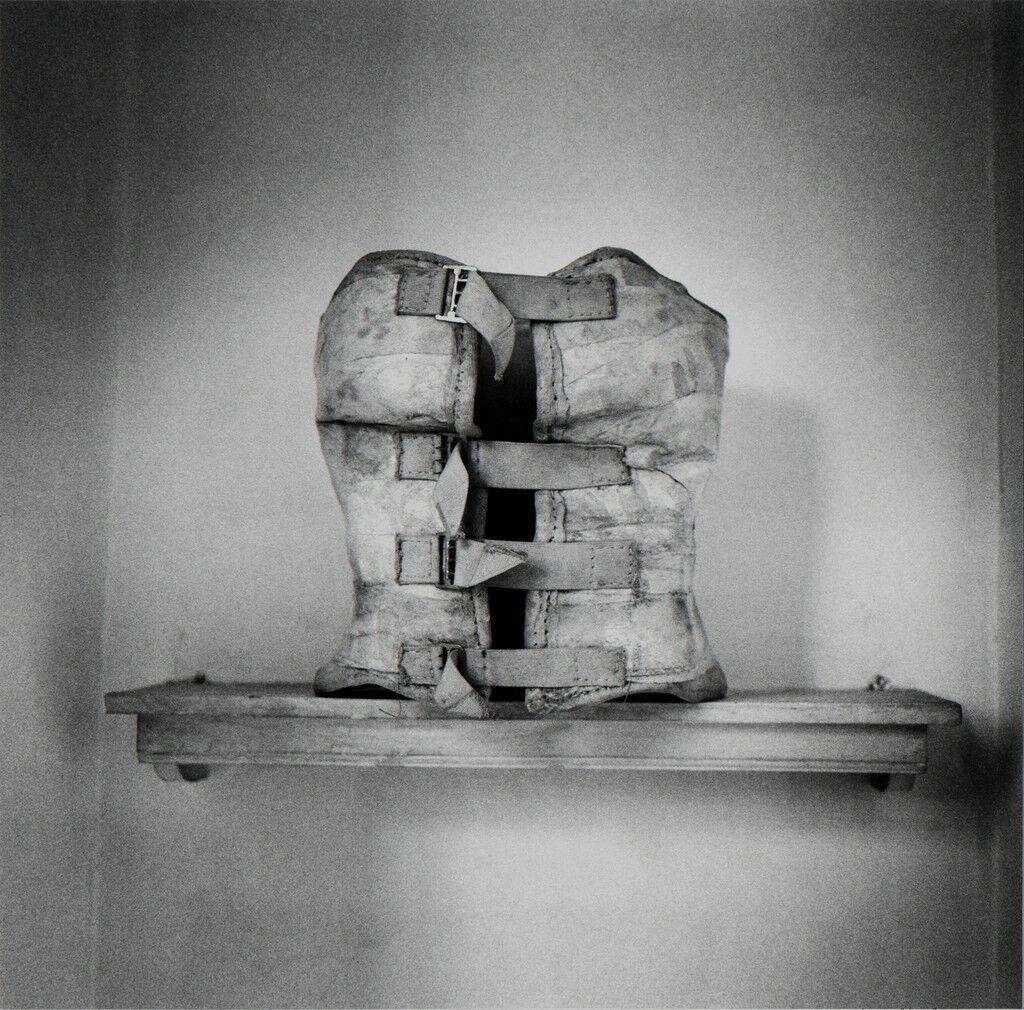
El baño de Frida (corset en el estante), Coyoacán, México
Graciela Iturbide, El baño de Frida (corset en el estante), Coyoacán, México, 2006. Ruiz-Healy Art

Iturbide’s MFA Boston show will be run concurrently with the museum’s “Frida Kahlo and Arte Popular” exhibition beginning on February 27th. It’s fitting that the two women will exhibit alongside each other, not just because they are among Mexico’s most important artists, but because Iturbide was allowed to photograph Kahlo’s bathroom in Casa Azul after it had been locked for over 50 years at the order of Diego Rivera, following Kahlo’s death. In a 2009 book called El baño de Frida Kahlo (“Frida Kahlo’s Bathroom”), Iturbide chronicled what Kahlo, who lived with chronic pain, left behind: containers of Demerol, a series of elegant yet confining back braces, a leg brace, a hot water bottle, a stained hospital smock. And yet, as with all of Iturbide’s work, the objects take on haunting austerity, saluting the life of another great Mexican artist in all of its vibrancy and pain. Much like Kahlo, Iturbide has spent a life finding the fantastical amongst the ordinary.

National Spotlight: Graciela Iturbide’s Mexico


By JENN SHAPLAND
JANUARY 30, 2019
Original article at themagsantafe.com

Museum of Fine Arts Boston, Boston, Massachusetts
January 19, 2019 
– May 12, 2019

Photos of Mexico from the 1970s to 2005 by Mexican photographer Graciela Iturbide bring a documentary impulse in touch with a poetic eye. Her photos are personal, yet immersive in cultures not her own; unafraid of the humorous, the strange, and the symbolic. Commissioned in 1978 by the Ethnographic Archive of the National Indigenous Institute of Mexico to photograph Mexico’s indigenous population, Iturbide traveled with anthropologist Luis Barjau to the Sonoran Desert in northwestern Mexico to live for several months with the Seri Indians. From this early trip comes Iturbide’s best-known photo, Angel Woman / Mujer angel (1979), which depicts a Seri woman carrying a boombox in an otherwise undeveloped desert landscape. Iturbide also traveled to Juchitán, a city in southern Oaxaca, to document the Zapotec people, whose culture reveres women’s independence and power. From this series, her photo of Zobeida Diaz, Our Lady of the Iguanas / Nuestra Señora de las Iguanas (1979), depicts a woman crowned by live iguanas—a surreal, potent portrait, despite the everyday setting as Diaz heads off to market to sell iguanas. Iturbide also documented the “third gender” of Zapotec people, muxes, who are valued within their culture. Her photos are dedicated to the uncanny or unseen elements of urban settings—sex workers, murals, unexpected juxtapositions—and bring to life an intimate, provocative interpretation of Mexico’s many peoples and cultures.

Graciela Iturbide, Merry-Go-Round / Volantín, San Martin Tilcajete, Oaxaca, México, 1976,
photograph, gelatin silver print. Museum purchase with funds donated by John and Cynthia Reed, Charles H. Bayley Picture and Painting Fund, Barbara M. Marshall Fund, Lucy Dalbiac Luard Fund, Horace W. Goldsmith Foundation Fund for Photography, Francis Welch Fund, and Jane M. Rabb Fund for Film and Photography. © Graciela Iturbide. Courtesy, Museum of Fine Arts, Boston.
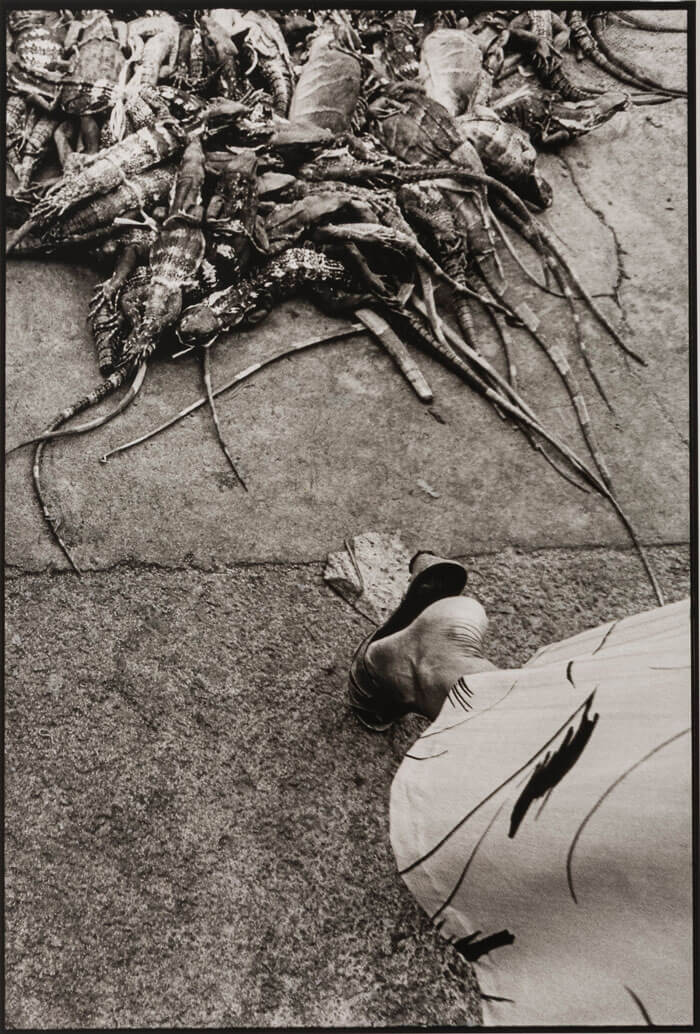
Graciela Iturbide, Iguanas, Juchitán, México, 1984, photograph, gelatin silver print. Museum purchase with funds donated by John and Cynthia Reed, Charles H. Bayley Picture and Painting Fund, Barbara M. Marshall Fund, Lucy Dalbiac Luard Fund, Horace W. Goldsmith Foundation Fund for Photography, Francis Welch Fund, and Jane M. Rabb Fund for Film and Photography. © Graciela Iturbide. Courtesy, Museum of Fine Arts, Boston.
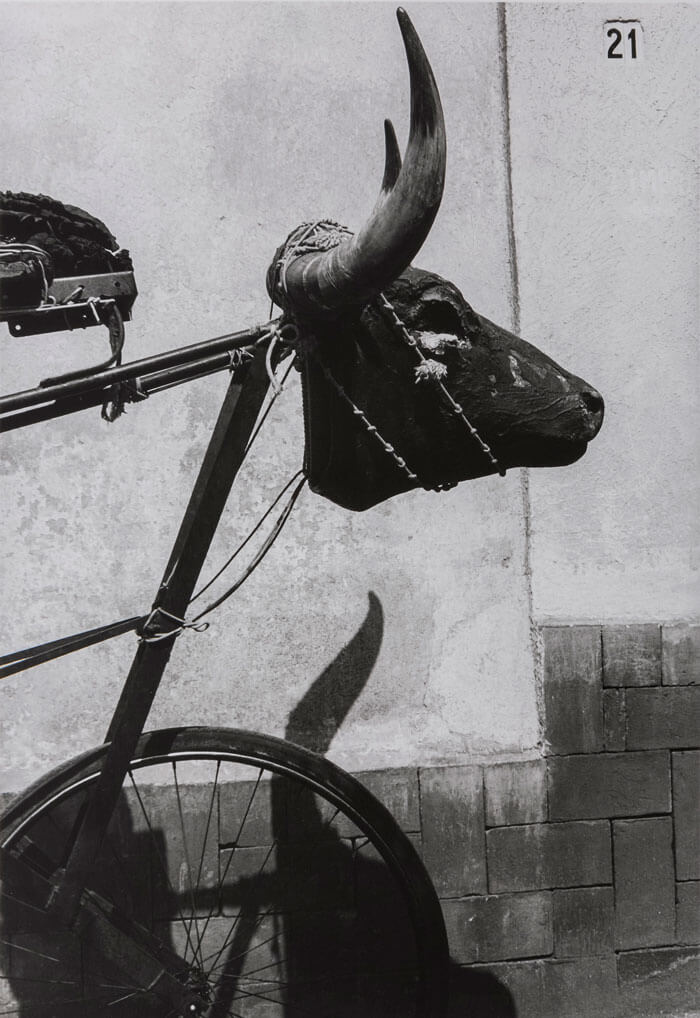
Graciela Iturbide, Little Bull, Coyoacán, Mexico City / Torito, Coyoacán, Ciudad de México, 1982,
photograph, gelatin silver print. Col. Galería López Quiroga. © Graciela Iturbide. Courtesy, Museum of Fine Arts, Boston.

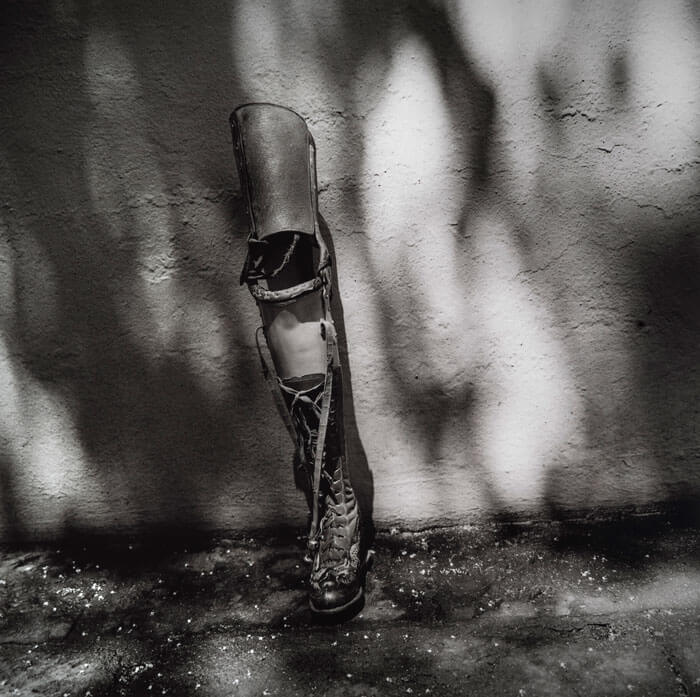
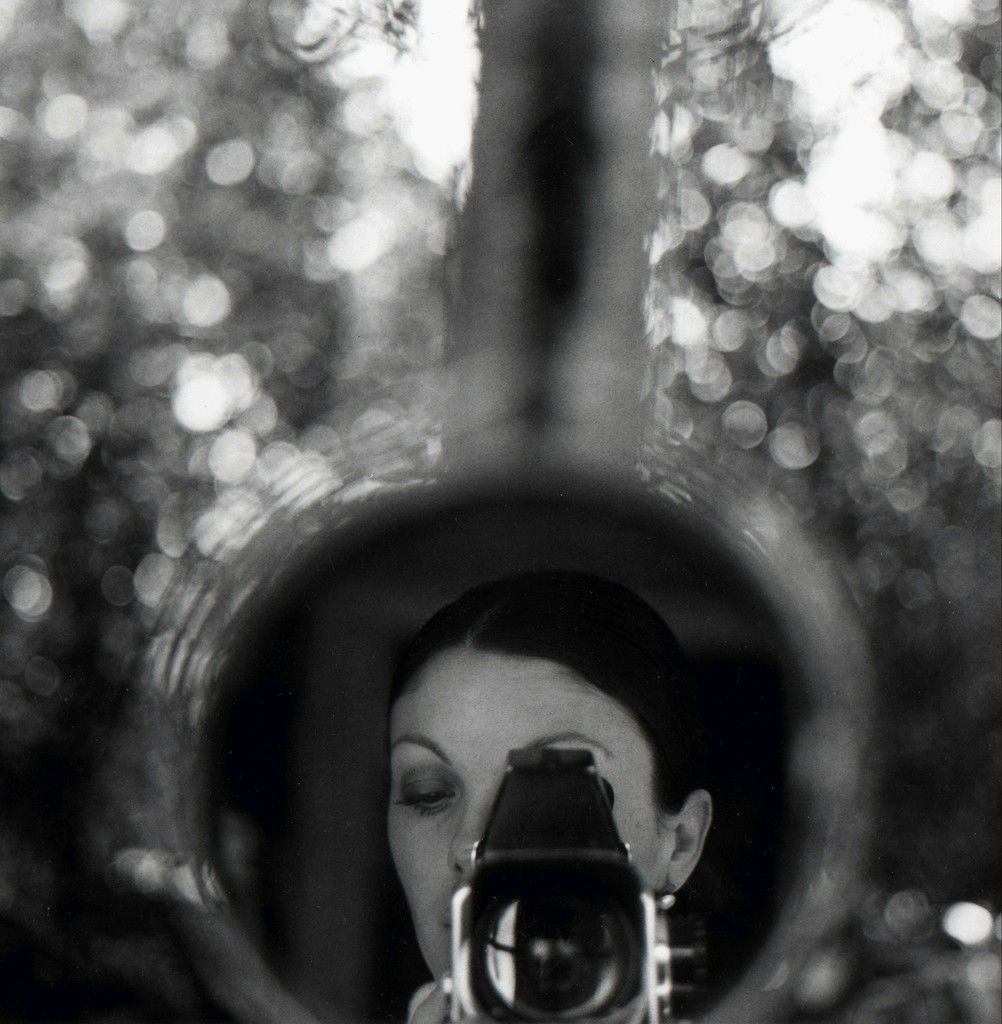
The most recent photos in the show come from Iturbide’s project photographing personal effects from Frida Kahlo’s bathroom at Casa Azul, which had been locked away for fifty years. Iturbide focused “primarily on objects related to Kahlo’s pain—from a box of Demerol, an opioid pain medication, to a prosthetic leg,” and created a self-portrait of her own bare feet in Kahlo’s bathtub. The series attests to Iturbide’s ongoing engagement with personal perspective on experiences outside her own. The exhibition includes interpretation in English and in Spanish and a documentary video of the artist shot at Iturbide’s studio in Mexico City. An illustrated catalogue published by MFA includes more than one hundred reproductions of photographs and essays. On May 5, 2019, Iturbide will participate in a symposium sponsored by the Karsh Center for Photography at the Museum of Fine Arts, Boston.

Graciela Iturbide, Frida’s Bathroom, Coyoacán, Mexico City/El Baño de Frida, Coyoacán, Ciudad de México, 2006, gelatin silver print. Museum purchase with funds donated by John and Cynthia Reed, Charles H. Bayley Picture and Painting Fund, Barbara M. Marshall Fund, Lucy Dalbiac Luard Fund, Horace W. Goldsmith Foundation Fund for Photography, Francis Welch Fund, and Jane M. Rabb Fund for Film and Photography. © Graciela Iturbide. Courtesy, Museum of Fine Arts, Boston.
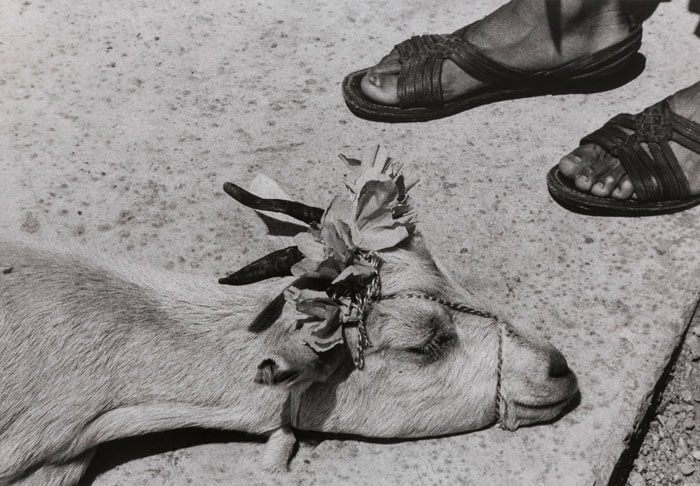
Graciela Iturbide, The Little Goat’s Dance, before the Slaughter / La danza de la cabrita, antes de la matanza, La Mixteca, 1992, photograph, gelatin silver print. Museum purchase with funds donated by John and Cynthia Reed, Charles H. Bayley Picture and Painting Fund, Barbara M. Marshall Fund, Lucy Dalbiac Luard Fund, Horace W. Goldsmith Foundation Fund for Photography, Francis Welch Fund, and Jane M. Rabb Fund for Film and Photography. © Graciela Iturbide. Courtesy, Museum of Fine Arts, Boston.
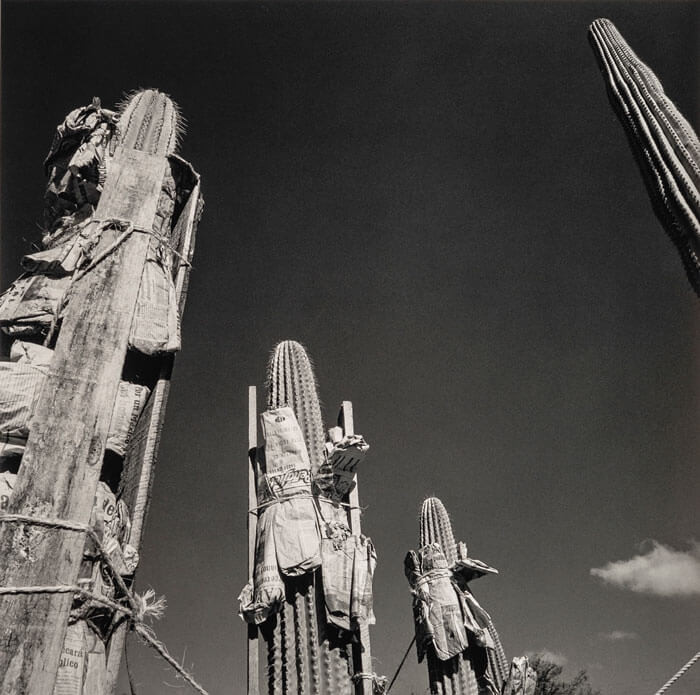
Graciela Iturbide, Botanical Garden / Jardín Botánico, Oaxaca, México, 1998-1999, photograph, gelatin silver print. Museum purchase with funds donated by John and Cynthia Reed, Charles H. Bayley Picture and Painting Fund, Barbara M. Marshall Fund, Lucy Dalbiac Luard Fund, Horace W. Goldsmith Foundation Fund for Photography, Francis Welch Fund, and Jane M. Rabb Fund for Film and Photography. © Graciela Iturbide. Courtesy, Museum of Fine Arts, Boston.
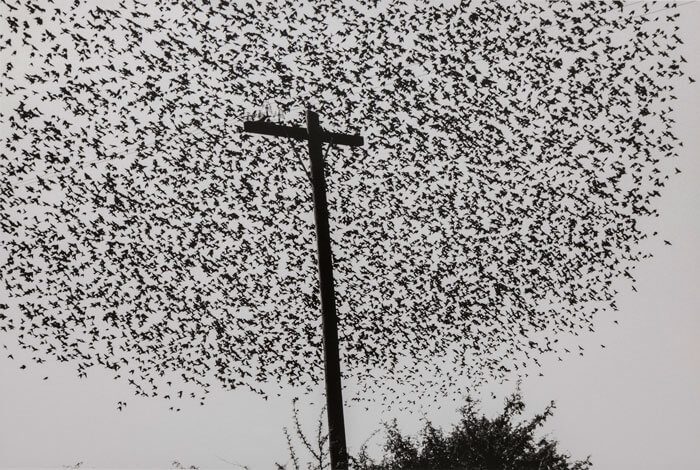
Graciela Iturbide, Birds on the Post, Highway / Pájaros en el poste, Carretera, Guanajuato, México, 1990, photograph, gelatin silver print. Museum purchase with funds donated by John and Cynthia Reed, Charles H. Bayley Picture and Painting Fund, Barbara M. Marshall Fund, Lucy Dalbiac Luard Fund, Horace W. Goldsmith Foundation Fund for Photography, Francis Welch Fund, and Jane M. Rabb Fund for Film and Photography. © Graciela Iturbide. Courtesy, Museum of Fine Arts, Boston.
Graciela Iturbide, Angel Woman, Sonora Desert/Mujer ángel, Desierto de Sonora México, 1979, gelatin silver print. Elizabeth and Michael Marcus. © Graciela Iturbide. Courtesy, Museum of Fine Arts, Boston.
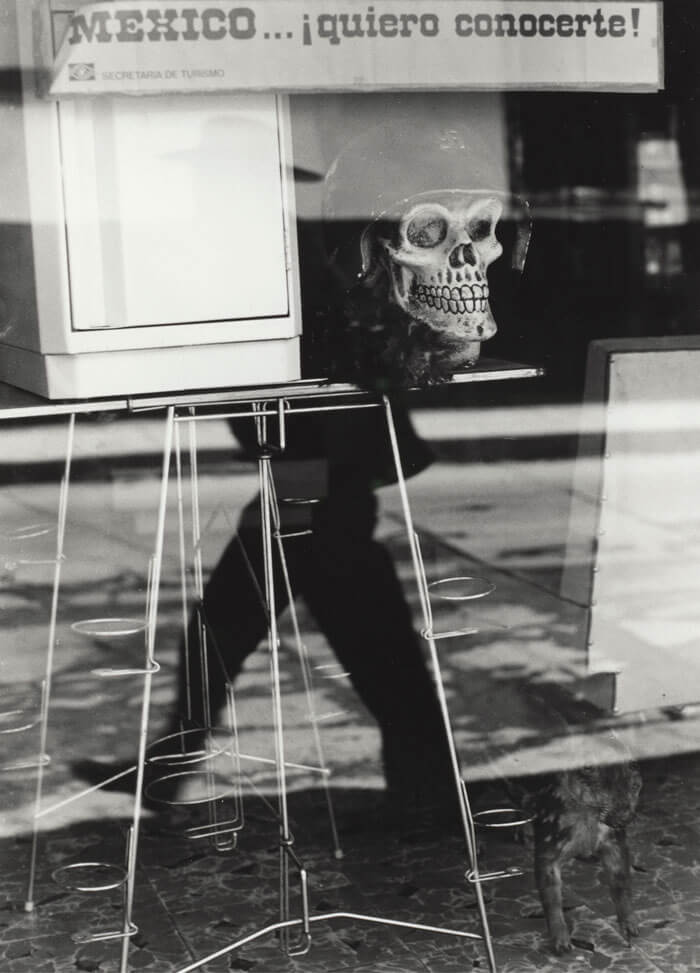
Graciela Iturbide, Mexico…I want to get to know you! / ¡México…Quiero Conocerte! Chiapas, México, 1975, photograph, gelatin silver print. Gift of the artist. © Graciela Iturbide. Courtesy, Museum of Fine Arts, Boston.
Graciela Iturbide, Chalma, 1974, photograph, gelatin silver print. Museum purchase with funds donated by John and Cynthia Reed, Charles H. Bayley Picture and Painting Fund, Barbara M. Marshall Fund, Lucy Dalbiac Luard Fund, Horace W. Goldsmith Foundation Fund for Photography, Francis Welch Fund, and Jane M. Rabb Fund for Film and Photography. © Graciela Iturbide. Courtesy, Museum of Fine Arts, Boston.
Graciela Iturbide, Fallen from Heaven / Cayó del Cielo, Chalma, México, 1989, photograph, gelatin silver print. Museum purchase with funds donated by John and Cynthia Reed, Charles H. Bayley Picture and Painting Fund, Barbara M. Marshall Fund, Lucy Dalbiac Luard Fund, Horace W. Goldsmith Foundation Fund for Photography, Francis Welch Fund, and Jane M. Rabb Fund for Film and Photography. © Graciela Iturbide. Courtesy, Museum of Fine Arts, Boston.
Graciela Iturbide, Alligator Festival / Festival del Lagarto, 1985, photograph, gelatin silver print. Museum purchase with funds donated by John and Cynthia Reed, Charles H. Bayley Picture and Painting Fund, Barbara M. Marshall Fund, Lucy Dalbiac Luard Fund, Horace W. Goldsmith Foundation Fund for Photography, Francis Welch Fund, and Jane M. Rabb Fund for Film and Photography. © Graciela Iturbide. Courtesy, Museum of Fine Arts, Boston
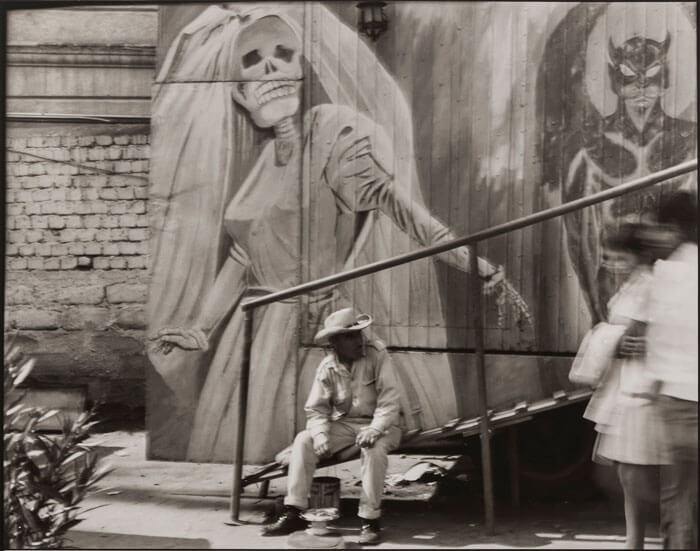
Graciela Iturbide, House of Death, Mexico City / Casa de la Muerte, Ciudad de México, 1975, photograph, gelatin silver print. Museum purchase with funds donated by John and Cynthia Reed, Charles H. Bayley Picture and Painting Fund, Barbara M. Marshall Fund, Lucy Dalbiac Luard Fund, Horace W. Goldsmith Foundation Fund for Photography, Francis Welch Fund, and Jane M. Rabb Fund for Film and Photography. © Graciela Iturbide. Courtesy, Museum of Fine Arts, Boston.
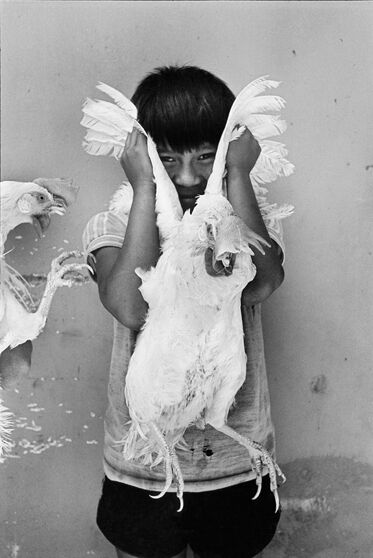
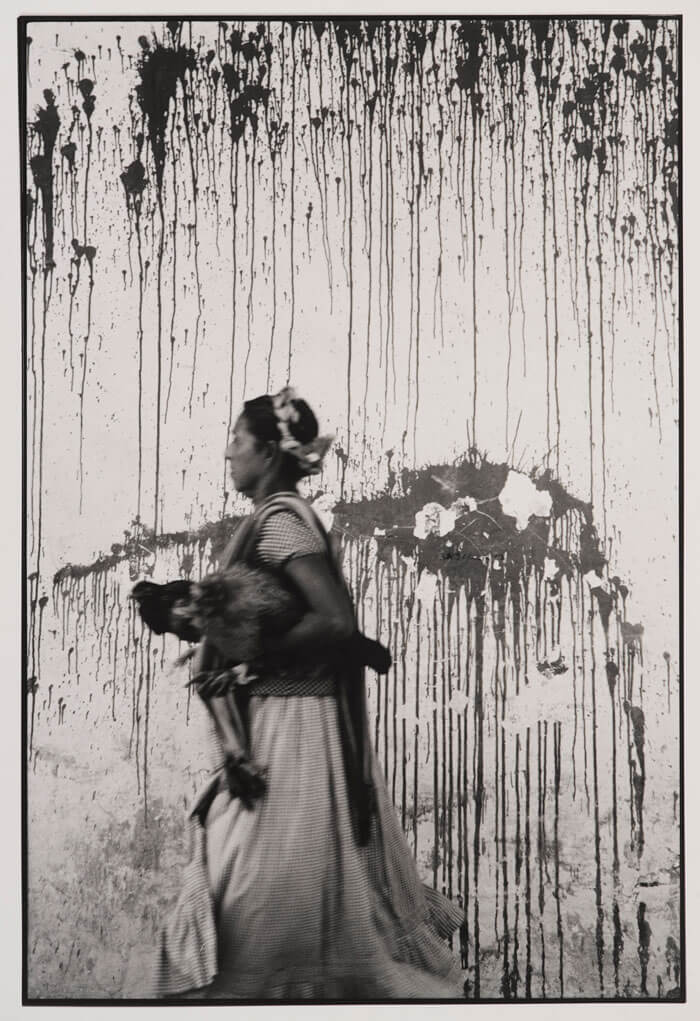
Graciela Iturbide, Chickens / Los pollos, Juchitán, México, 1979, photograph, gelatin silver print. Brooklyn Museum, Gift of Marcuse Pfeifer 1990.119.35. © Graciela Iturbide. Courtesy, Museum of Fine Arts, Boston.
Graciela Iturbide, Our Lady of the Iguanas, Juchitán, México/Nuestra Señora de las Iguanas, 1979, gelatin silver print. Daniel Greenberg and Susan Steinhauser. © Graciela Iturbide. Courtesy, Museum of Fine Arts, Boston.

Jenn Shapland is an editor and nonfiction writer living in New Mexico. Her first book, The Autobiography of Carson McCullers: A Memoir, will be published in 2020 by Tin House Books. She teaches in the creative writing department at the Institute of American Indian Arts.

Robert Fantozzi, Flor Garduno, Graciela Iturbide, Rachelle Mozman, Re’e Pe’e

Albuquerque/Journal North, Kate McGraw, 01/30/2009

If you are an artistic photographer; to what extent does your home—the place where you live and work—color the intent and result of the portraits you shoot?  A group of artists from Mexico, Peru, Panama and Cuba whose photographs explore their subject’s connections to their cultural and geographical context are featured in “Portrait and Place,” a show opening today at Eight Modern on Delgado Street.

Robert Fantozzi, Flor Garduño, Graciela Iturbide, Rachelle Mozman  and Reñe Peña are included in the exhibition, gallery director Jaquelin Loyd said, “Some of the connections these photographers have to these cultures in which they work are expected and some are unexpected.”


Robert Fantozzi

Based in Lima Peru, Fantozzi, 55, won first place in a photography context sponsored by the University of Lima in 1976.  Inspired by that win to pursue photography as a career, he earned a Fulbright scholarship and received his master’s degree in 1981 from the Rhode Island School of Design.

Fantozzi has a taste for the bizarre, and his work frequently touches upon the art of photography itself, or other methods of representation.


Flor Garduño

Garduño, 51 was born in Mexico City and raised on a farm in rural Mexico. From 1976 to 1978, she received her formal arts education at the Antigua Academia de San Carlos (UNAM) under the tutelage of the Hungarian photographer Kati Horna. However, in 1979, her studies were foreshortened upon her acceptance of an offer to work as the darkroom assistant to Manuel Alvanez Bravo—regarded as perhaps the greatest Mexican photographer of his era.

Garduño’s sensual, poetic black-and-white photographs of the Americas and female nudes draw deeply from a vein of mythic symbolism and magical realism. Her work has been exhibited at the Art Institute of Chicago, and the national fine arts museums of numerous countries, including Argentina, Bolivia, Chile, Columbia, Peru, Uruguay, and her native Mexico.  Garduño has published seven monographs, for which she has won numerous awards.


Graciela Iturbide

Inturbide, 66 is considered one of the most influential modern Mexican photographers.  A 1969 graduate in filmmaking from the Centro Universitario de Estudios Cinematográficos at the Universidad Nacional Autónoma de Mexico, she also served as an assistant to Manuel Alvarez Bravo.  Her images have become emblematic of Mexican ritual and culture.  Fascinated by both the theatrical and mundane, Inturbide describes the camera as “an instrument capable of disintegrating moral barriers, personal and social inhibitions, trusts, and distrusts.”

Her work has been exhibited at the Metropolitan Museum of Art, the Museum of Modern Art and the Getty Museum, and she has received numerous honors, including Guggenheim Fellowship and the 2008 Haselbad Foundation Award in Photography.


Rachelle Mozman

Mozman is based in both Panama City and Brooklyn, is slated to attend the reception today.  Also a former Fulbright scholar, she earned a master’s in fine arts degree in 1998 from the Tyler School of Art.  Her recent photographic projects, “American Exurbia” and “Costa del Este,” depict children from New Jersey and Panama in their homes, drawing surprising parallels between products of similar exurban environments.

Mozman’s work exists as an exploration of identity creation and globalization, depicting moments where individuality meets the constraints of newly formed communities and cultures.


Reñe Peña

Contrast is a central theme in the work of Cuban photographer Peña, 52.  Working in black and white, Peña explores the dualities that define people, such as the external tension between individual and institution.  Peña takes searing, honest looks at the individual, including self portraits that explore issues such as blackness and sexual ambiguity.
Peña actually studied the English language from 1977 to 1983 at the Instituto Superior de Lenguas Extranjeras in Havana, where he was born and raised.  He began his work as a photographer on his own.
A self-taught artist, Peña has exhibited work around the world, including Italy and Germany, and in his home country, Mexico and Peru, as well as at the Houston Museum of Fine Art , the National Museum of Fine Arts in Cuba, Fototeca de Cuba, Lehigh University and SUNY-Albany, New York.

PRESS RELEASE – Portrait and Place: Contemporary Latin American Photography

Portrait and Place: Contemporary Latin American Photography

January 30-Febuary 28

SANTA FE, NEW MEXICO – Eight Modern is pleased to announce its upcoming exhibition, Portrait and Place: Contemporary Latin American Photography.

Portrait and Place brings together a group of artists from Mexico, Peru, Panama and Cuba whose photographs explore their subjects’ connections, both expected and unexpected, to their cultural and geographical context. Included in the exhibition are Robert Fantozzi, Flor Garduño, Graciela Iturbide, Rachelle Mozman and René Peña.

Born in 1953 and based in Lima, Fantozzi won first place in a photography contest sponsored by the University of Lima in 1976. Inspired to pursue photography as a career, he earned a Fulbright scholarship and received his M.F.A. in 1981 from the Rhode Island School of Design. With a taste for the bizarre, Fantozzi’s work frequently touches upon the art of photography itself, or other methods of representation.

Garduño’s sensual, poetic black-and-white photographs of the native peoples of the Americas and female nudes draw deeply from a vein of mythic symbolism and magical realism. Her work has been exhibited at the Art Institute of Chicago, the Museum of Contemporary Photography in Chicago, and at the national fine arts museums of numerous countries, including Argentina, Bolivia, Chile, Colombia, Peru, Uruguay and her native Mexico. Garduño has published seven monographs, for which she has won numerous awards.

Considered one of the most influential modern Mexican photographers, Iturbide’s images have become emblematic of Mexican ritual and culture. Fascinated by both the theatrical and mundane, Iturbide describes the camera as “an instrument capable of disintegrating moral barriers, personal and social inhibitions, trusts and distrusts.” Her work has been exhibited at the Metropolitan Museum of Art, the Museum of Modern Art and the Getty Museum, and she has received numerous honors, including a Guggenheim Fellowship and the 2008 Hasselbad Foundation Award in Photography.

Mozman is based in both Panama City and Brooklyn. Also a former Fulbright scholar, Mozman received her M.F.A. in 1998 from the Tyler School of Art. Her recent photographic projects, American Exurbia and Costa del Este, depicts children from New Jersey and Panama in their homes, drawing surprising parallels between products of similar exurban environments. Mozman’s work exists as an exploration of identity creation and globalization, depicting moments where individuality meets the constraints of newly formed communities and cultures.

Contrast is a central theme in the work of Cuban photographer René Peña. Working in black and white, Pena explores the dualities that define us, such as the eternal tension between individual and institution. Pena takes searing, honest looks at the individual, including self-portraits that explore issues such as blackness and sexual ambiguity. A self-taught artist, Pena has been exhibited at the Houston Museum of Fine Art, the National Museum of Fine Arts in Cuba, Fototeca de Cuba, Lehigh University and SUNY-Albany.

  • Portrait and Place: Contemporary Latin American Photography
    January 30, 2009–February 28, 2009
  • Magnolia, Juchitan, Oaxaca
    Magnolia, Juchitan, Oaxaca
  • Magnolia, Juchitan, Oaxaca
    Magnolia, Juchitan, Oaxaca

Tuesday–Saturday
10am–5pm


1601 Paseo de Peralta
Santa Fe, NM 87501
(505) 984 1387

FB LinkInstagram LinkYouTube LinkPinterest LinkTwitter LinkArtsy Link

/detail/?artistId=158350&offset=0&historic
/detail/?artistId=131353&offset=0&historic
/detail/?artistId=131313&offset=0&historic
/detail/?artistId=438148&offset=0&historic
/detail/?artistId=131261&offset=1&historic
138778
379223
324077
131264
131282
131283
131284
437132
290764
132133
354172
156549
131288
437130
131267
132134
438817
131289
131258
131320
131291
275525
131293
137906
131295
290914
137911
131297
131298
131276
131280
131299
131266
137912
131301
280559
437134
131356
131321
430063
131307
131305
131306
131309
131257
131322
437128
131274
131311
131259
131271
131316
131287
131008
130963
131049
131085
131164
131109
130991
130888
274796
131047
130966
440262
130977
131087
130878
131086
436152
131097
130918
131088
130970
130883
131057
439293
131096
130968
131247
337926
130895
130893
131043
130917
130920
130905
131228
131143
131008
130963
131049
131085
131109
130991
130888
131047
130966
440262
437132
130977
437130
131087
130878
131086
436152
131097
131088
130970
130883
131057
439293
131096
130968
131247
337926
131043
130905
437128